Typical reef area5 million m2
1.2 millionPing pong table tops
14.7Disneylands
359Costco stores
5 km2 for a mid-sized reef system
The world's least useful encyclopedia
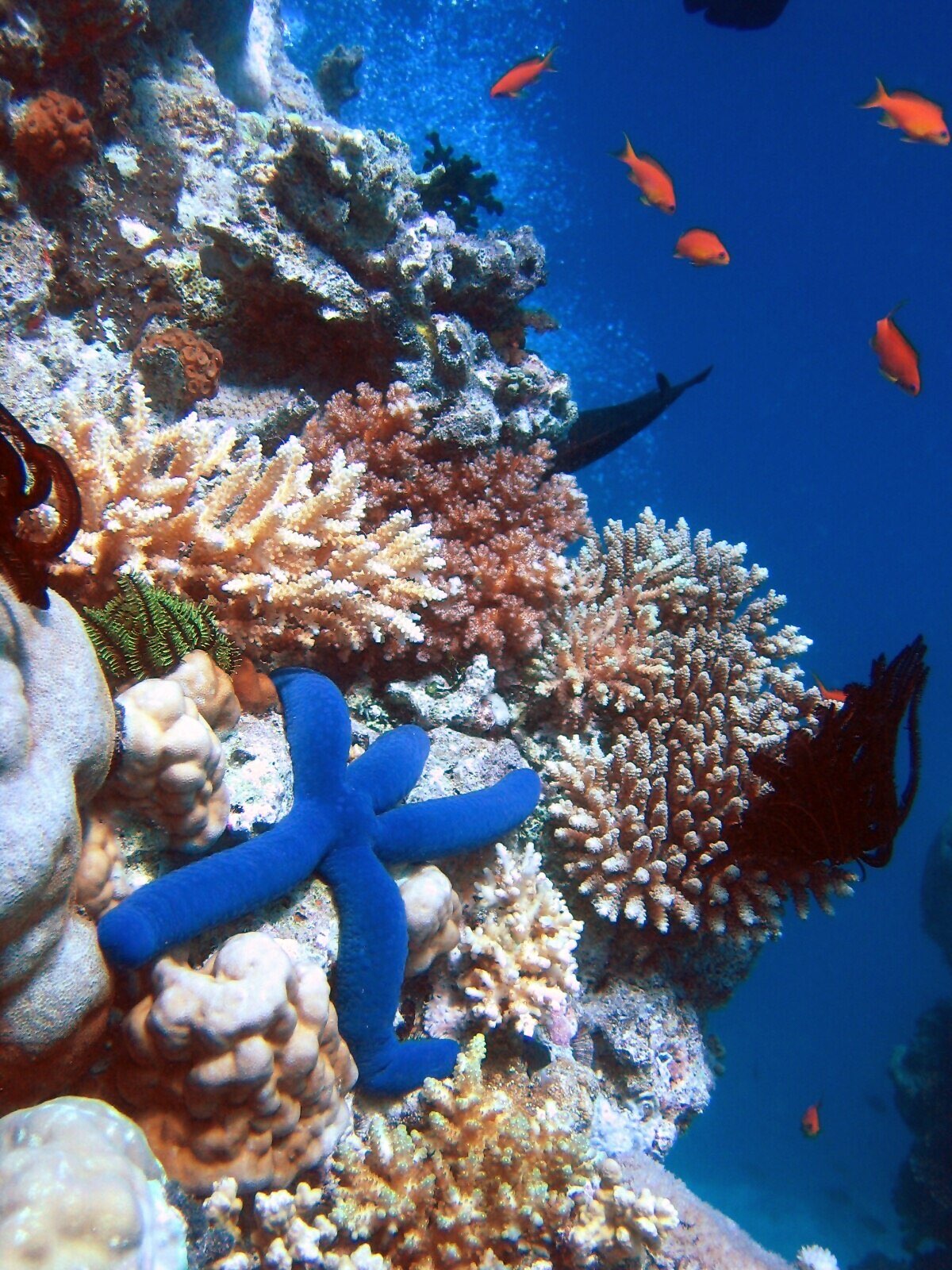
Photo from Wikimedia Commons
The living limestone structures that support 25% of marine life/Nature & Natural Wonders
Coral reefs are massive underwater structures built by colonies of tiny coral polyps that secrete calcium carbonate skeletons. A typical reef system covers a few square kilometers, rises 10-30 m from the seabed, and grows at a rate of 1-3 cm per year. Despite covering less than 0.1% of the ocean floor, coral reefs support about 25% of all marine species. They take thousands of years to form, with some reef systems being over 10,000 years old. The Great Barrier Reef is the largest at over 344,000 km2.
5 km2 for a mid-sized reef system
Rise above seabed
About 2 cm per year
Individual coral polyp
Sunlit zone requirement
About 26 degrees C