Estimated explosive energy10 quadrillion J
2.4 billionSticks of dynamite
20 quadrillionDropped phones
29,412Nuclear fuel pellets
~3-15 megatons TNT equivalent; ~1,000 times the Hiroshima bomb
The world's least useful encyclopedia
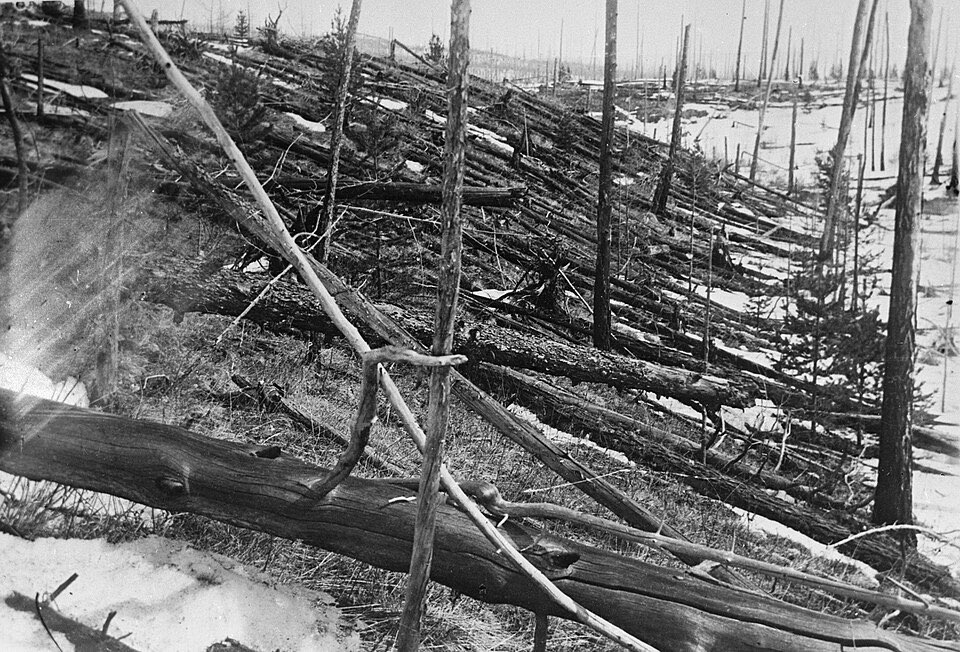
Photo from Wikimedia Commons
The mysterious 1908 explosion that flattened 2,000 km² of Siberian forest/Events & Phenomena
On the morning of June 30, 1908, something exploded in the atmosphere above the Tunguska River in Siberia with the force of 10-15 megatons of TNT. It flattened an estimated 80 million trees over 2,150 square kilometers but left no impact crater. The leading theory is an asteroid or comet fragment 50-60 meters in diameter that disintegrated in an airburst at roughly 5-10 km altitude. The remoteness of the region meant no human fatalities were confirmed, though reindeer were not so lucky.
~3-15 megatons TNT equivalent; ~1,000 times the Hiroshima bomb
~2,150 km²; about the area of greater London
Trees knocked flat over a ~40 km radius
5-10 km above the surface; explains the lack of a crater
50-60 m asteroid or comet fragment; relatively small for such devastation
Estimated ~3 atm peak overpressure at the epicenter