Lower city area300,000 m^2
80,645King-size beds
1,538American houses
The world's least useful encyclopedia
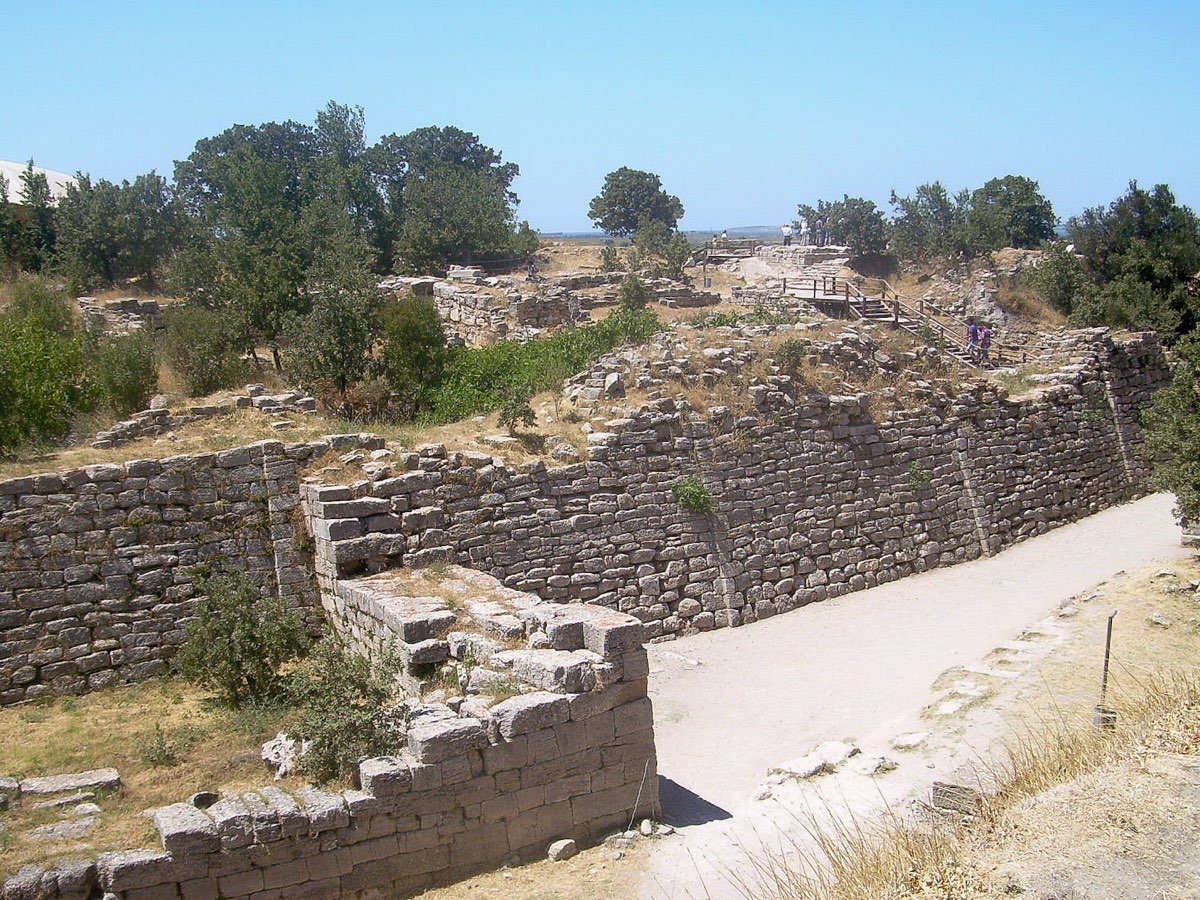
Photo from Wikimedia Commons
The legendary city of Homer's Iliad, layered with 4,000 years of history/Archaeology & Antiquities
Troy (Hisarlik) is an archaeological site in northwestern Turkey that contains the remains of at least nine distinct cities built on top of one another over roughly 4,000 years, from about 3000 BC to 500 AD. The site was famously excavated by Heinrich Schliemann beginning in 1870. Troy VII is widely considered the most likely candidate for Homer's Troy. The citadel mound covers about 2 hectares, while the surrounding lower city extended to roughly 30 hectares. It became a UNESCO World Heritage Site in 1998.
Founded circa 3000 BC