Height15 m
169Crayons
224Tennis ball diameters
Large siege trebuchet at full height
The world's least useful encyclopedia
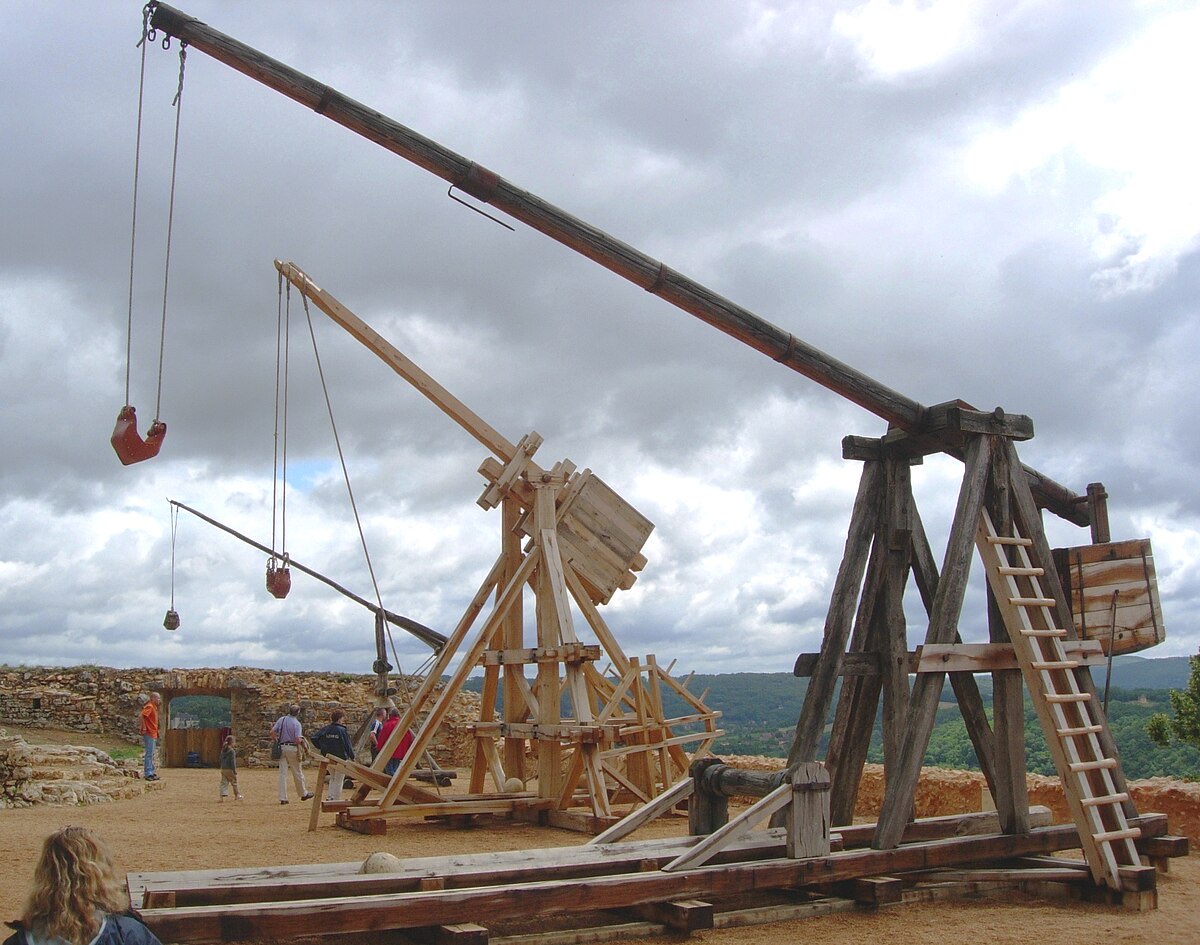
Photo from Wikimedia Commons
The counterweight siege engine that shattered castle walls/Historical
The counterweight trebuchet was the most powerful siege engine of the medieval period, capable of hurling projectiles weighing 100-150 kg over 300 meters. A large trebuchet stood about 10-17 m tall with a throwing arm of 10-15 m. The counterweight box held 10-20 tonnes of stone or earth. Edward I's famous 'Warwolf' trebuchet, used at the Siege of Stirling Castle in 1304, was reportedly so large it took 30 wagons to transport and five master carpenters three months to build.
Large siege trebuchet at full height
Throwing beam
Stone and earth fill
Typical stone projectile
Maximum effective range
Timber frame footprint
Frame and mechanism