Body length2.4 m
5Office chair heights
188 billionthsEarth diameters
44.4Credit card widths
The world's least useful encyclopedia
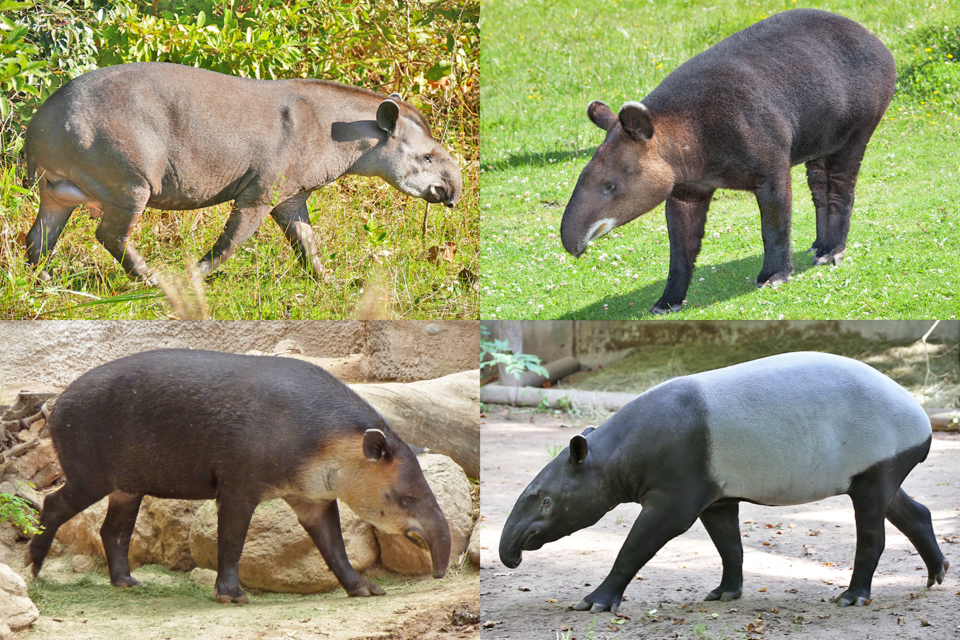
Photo from Wikimedia Commons
A pig-like herbivore with a prehensile nose, largely unchanged for 20 million years/Large Land Animals
Tapirs are large, pig-like herbivores with a short, prehensile trunk formed from their upper lip and nose. They are considered 'living fossils' because they have changed very little over the past 20 million years. There are four living species found in Central America, South America, and Southeast Asia. The Malayan tapir, the largest species, has a distinctive black-and-white coloring that breaks up its outline in moonlit forests. Tapirs are excellent swimmers and often submerge completely to escape predators or to cool off. They play a crucial role as seed dispersers in tropical forests.
About 48 km/h
About 30 years