Mass20 nonillion kg
111 octillionMale gorillas
556 septillionLoaded semi trucks
200 octillionBaby elephants
About 10 solar masses
The world's least useful encyclopedia
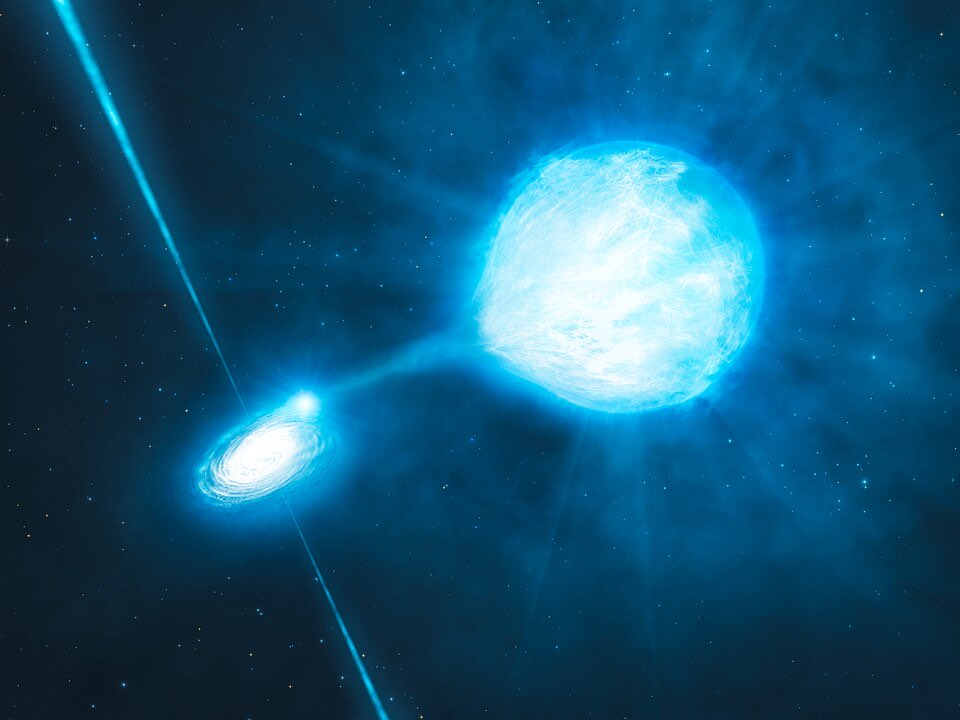
Photo from Wikimedia Commons
A dead star so dense that light itself cannot escape/Deep Space
A stellar-mass black hole forms when a massive star (at least 20-25 times the mass of the Sun) collapses at the end of its life. A typical stellar black hole has about 10 solar masses and an event horizon diameter of about 60 km. Within that boundary, the escape velocity exceeds the speed of light, making it a one-way trip for anything that crosses it. Despite their fearsome reputation, stellar black holes are relatively common — there may be 100 million of them in the Milky Way alone.
About 10 solar masses
About 60 km across; smaller than a city
The speed of light; that is the whole point
About 30 km
Extreme tidal stretching (spaghettification)
About 6 nanokelvin; essentially zero