Engine length4.24 m
42.4Hand breadths
2.83Standard pool noodles
237Dime diameters
The world's least useful encyclopedia
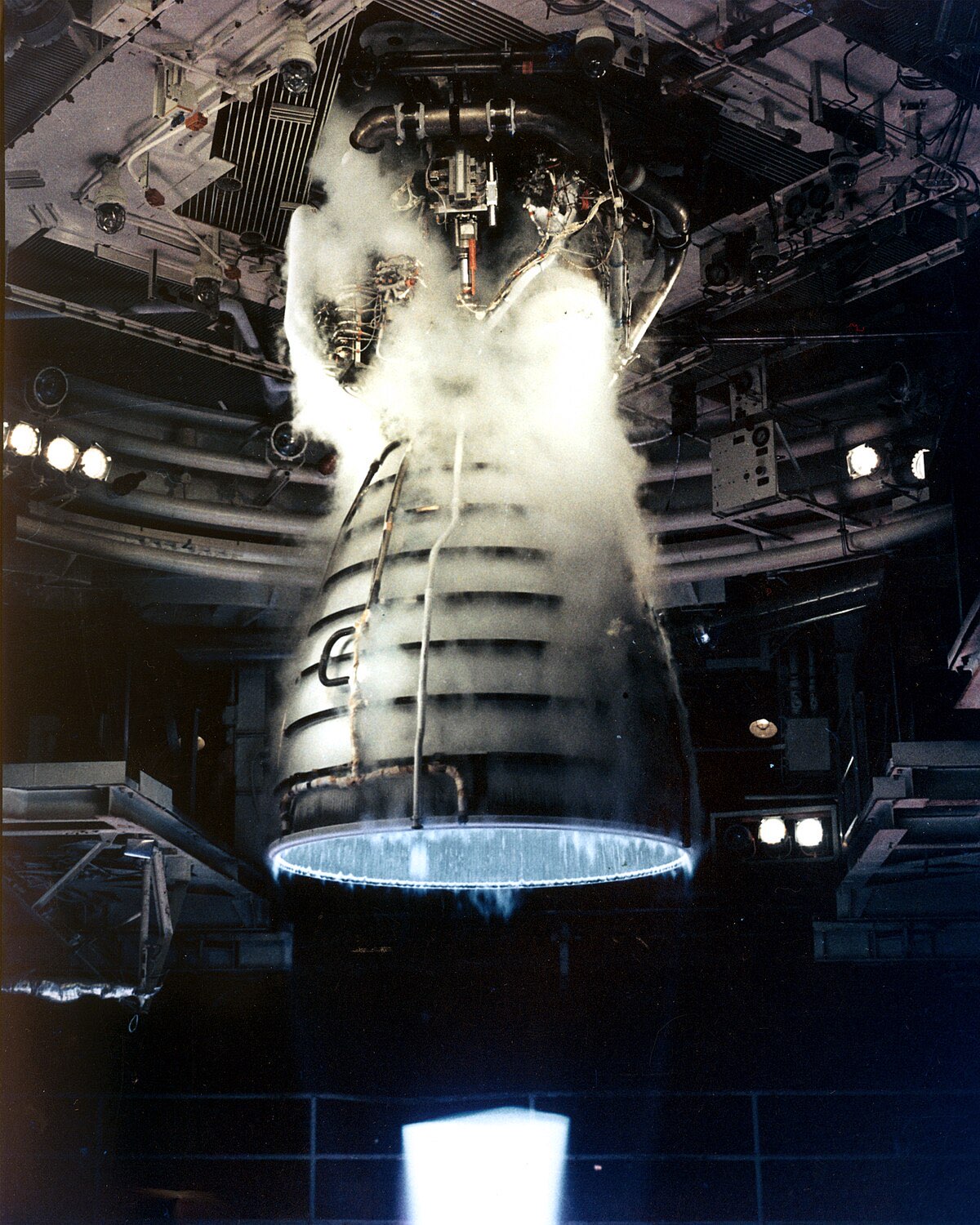
Photo from Wikimedia Commons
The most efficient liquid-fuel rocket engine ever flown/Engineering Marvels
The RS-25, which powered the Space Shuttle for 30 years, is one of the most sophisticated rocket engines ever built. Each engine produces 1.86 meganewtons of thrust at sea level and operates at a combustion chamber pressure of 20.6 MPa. The turbopumps spin at 37,000 RPM, and the engine achieves 99.95% combustion efficiency. Three RS-25s powered each Shuttle mission, and they are now being used on the SLS rocket.
1.86 MN
20.6 MPa
About 3300 degrees C
37,000 RPM