Mass3 millionths kg
188 trillionthsFire trucks
30 millionthsNewborn pandas
857 billionthsNewborn babies
About 3 micrograms
The world's least useful encyclopedia
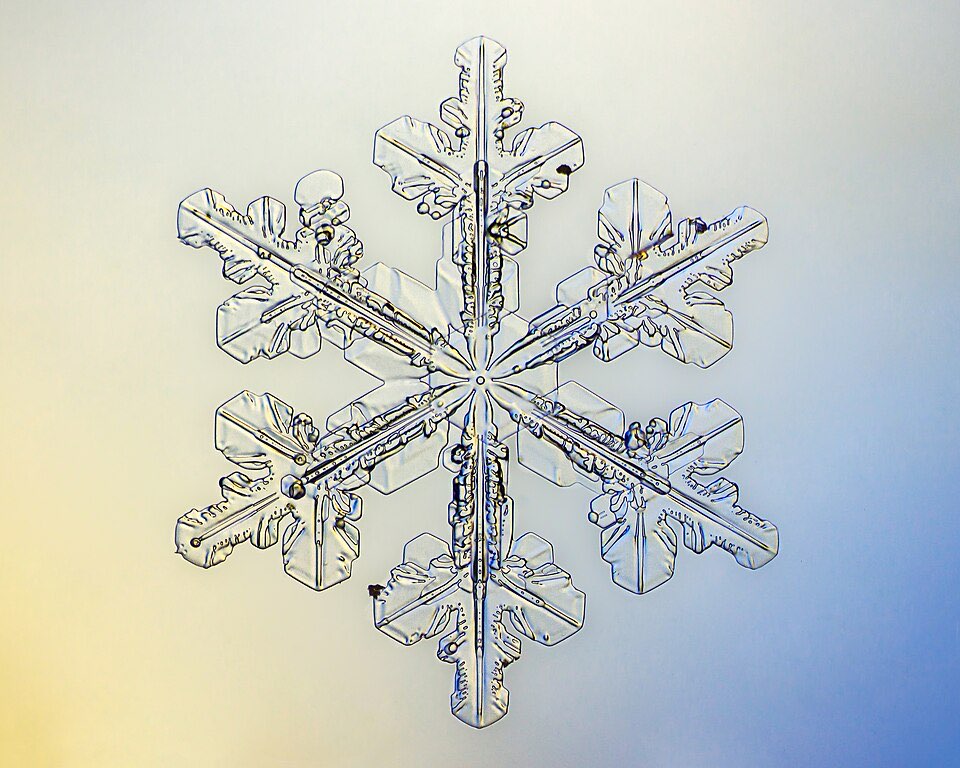
Photo from Wikimedia Commons
A tiny ice crystal with famously unique geometry/Events & Phenomena
No two snowflakes are alike — or so the saying goes. A typical snowflake is a hexagonal ice crystal about 5 mm across and weighing just 3 micrograms. They form when water vapor deposits directly onto ice nuclei in clouds at temperatures between -2°C and -35°C. The six-fold symmetry comes from the molecular structure of ice. A single snowflake takes about 30 to 45 minutes to fall from the cloud to the ground, drifting at a leisurely 1.5 m/s.
About 3 micrograms
5 mm typical; ranges from 1–10 mm
About 5.4 km/h in still air
-15°C; ideal for dendrite formation
About 0.1 mm
About 40 minutes from a typical cloud