Main overland route length6.4 million m
32 millionBurrito lengths
16.8 trillionViolet light wavelengths
The world's least useful encyclopedia
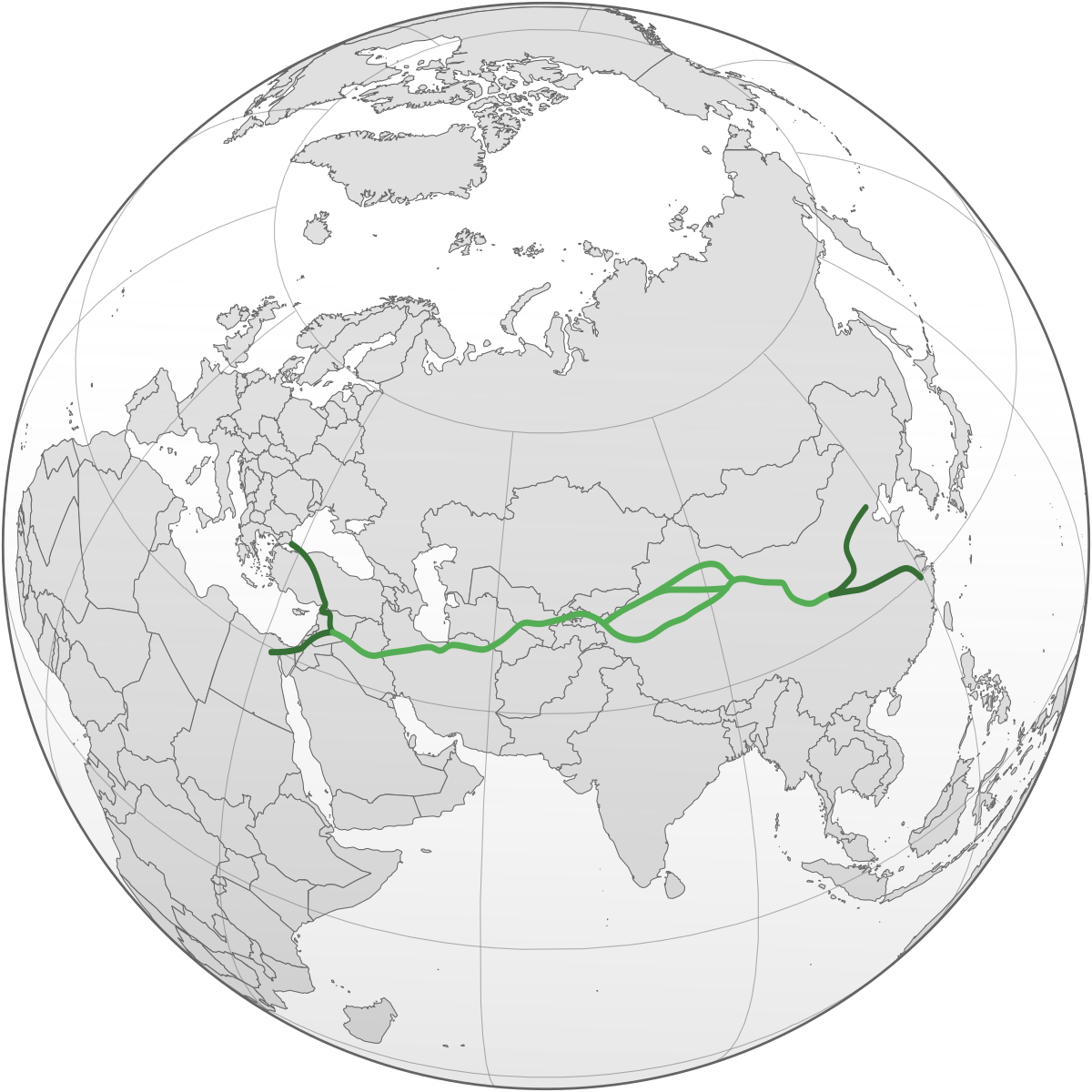
Photo from Wikimedia Commons
6,400 kilometers of ancient trade routes linking East and West/Infrastructure
The Silk Road was an interconnected network of trade routes spanning roughly 6,400 kilometers from Chang'an (modern Xi'an) in China to the Mediterranean coast. Active from the 2nd century BC through the 15th century AD, it facilitated the exchange of silk, spices, precious metals, religions, technologies, and diseases between East and West. The routes crossed some of the harshest terrain on Earth, including the Taklamakan and Gobi deserts and the Pamir Mountains. The name was coined by German geographer Ferdinand von Richthofen in 1877. Maritime 'Silk Roads' through the Indian Ocean eventually extended the network's reach even further.
2nd century BC to 15th century AD
About one year each way