Body length (typical)300 millionths m
15 millionthsGrain silo heights
400 millionthsHuman strides
386 quintillionthsJupiter orbit radii
About 300 micrometers
The world's least useful encyclopedia
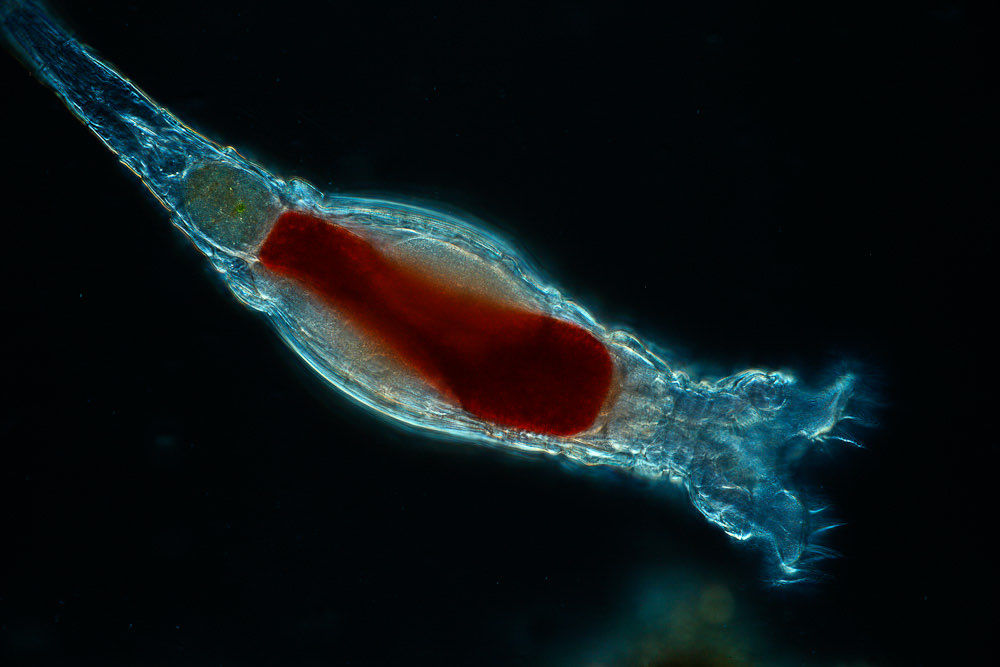
Photo from Wikimedia Commons
A microscopic animal with spinning wheel-like cilia around its mouth/Microscopic Life
Rotifers are microscopic aquatic animals, typically 100 to 500 micrometers long, named for the spinning, wheel-like ring of cilia (the corona) around their mouths that draws in food and creates the illusion of rotation. Despite their tiny size, rotifers have a complete digestive system with a mouth, stomach, and intestine. Some species, called bdelloid rotifers, have reproduced entirely without sex for over 50 million years. Rotifers can survive extreme conditions through cryptobiosis: when dried out, they enter a state of suspended animation and can revive years later when water returns. They are found in nearly every freshwater habitat on Earth.
About 300 micrometers
About 1 microgram
About 14 days