Height1.12 m
4.01Football lengths
19.4 trillionthsMercury orbit radii
1.68Flute lengths
Incomplete; the top is broken off
The world's least useful encyclopedia
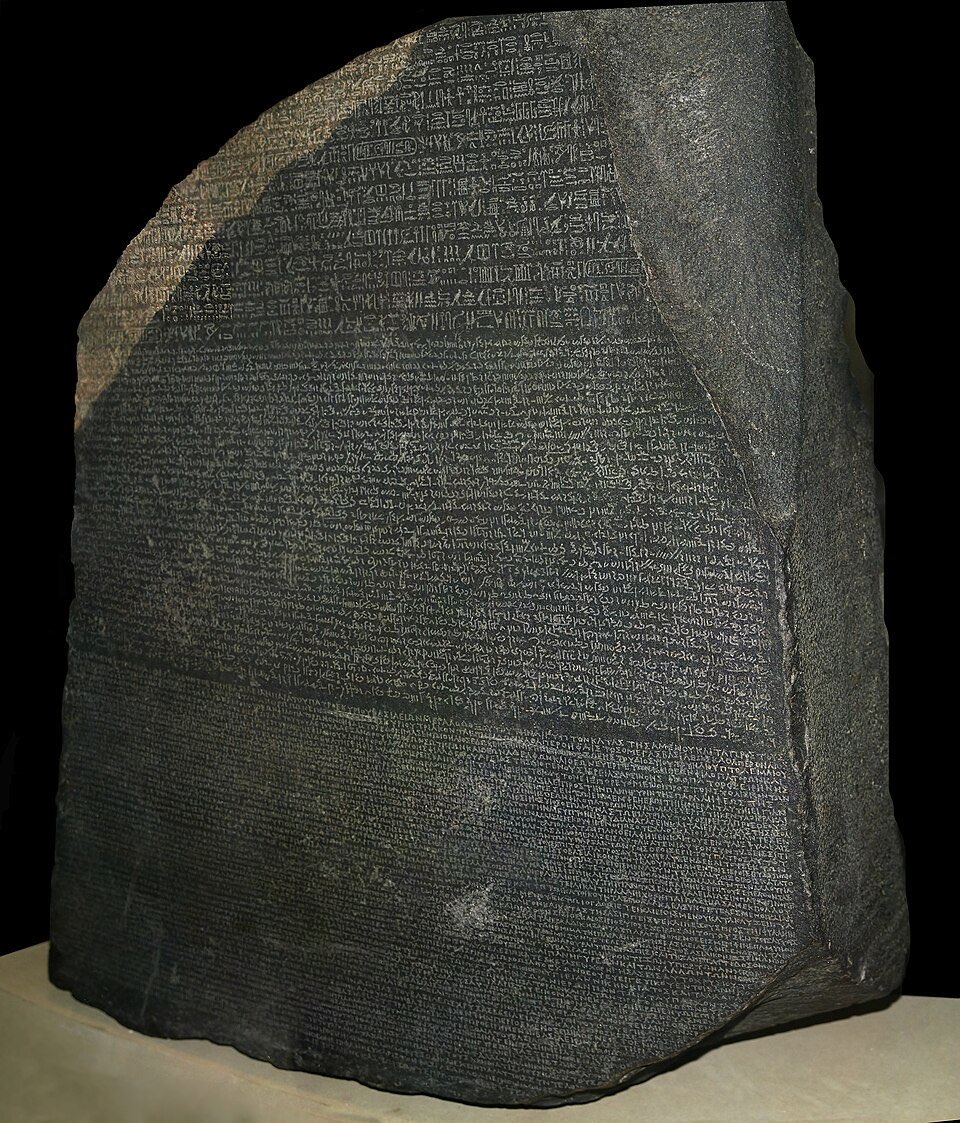
Photo from Wikimedia Commons
The key that unlocked ancient Egyptian hieroglyphs/Everyday Objects
The Rosetta Stone is a granodiorite slab inscribed with a decree issued in 196 BC during the reign of Ptolemy V. The same text appears in three scripts: hieroglyphic, Demotic, and ancient Greek, which allowed Jean-François Champollion to crack the hieroglyphic code in 1822. Found by French soldiers in 1799 near the town of Rashid (Rosetta) in Egypt, it has been in the British Museum since 1802, much to Egypt's continued annoyance.
Incomplete; the top is broken off
Roughly slab-shaped
Front surface