Total city area660,000 m^2
2.6 millionMonopoly boards
33 millionSubway tiles
The world's least useful encyclopedia
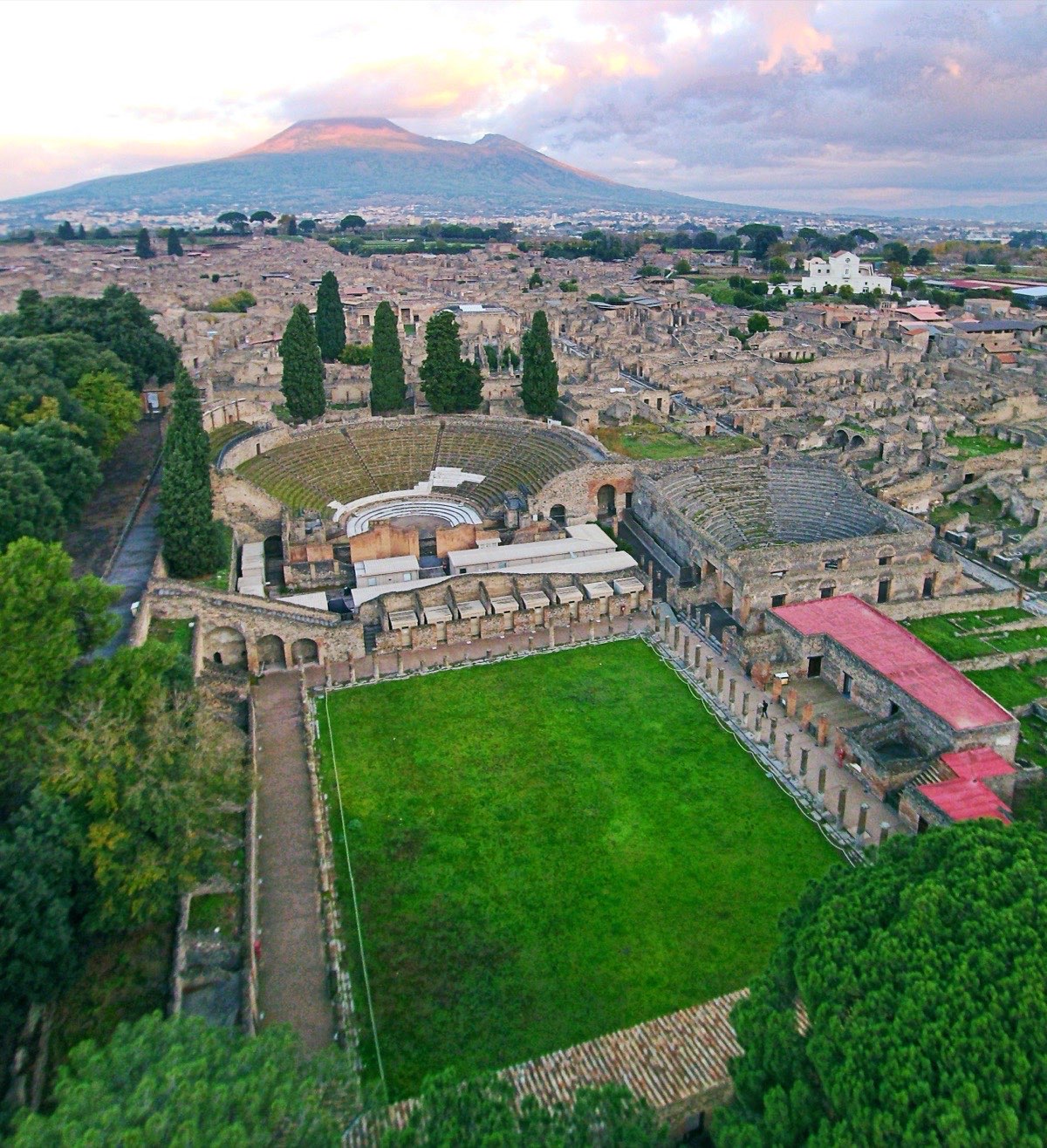
Photo from Wikimedia Commons
A Roman city frozen in time by volcanic ash in 79 AD/Archaeology & Antiquities
Pompeii was a thriving Roman city of roughly 11,000 people near modern Naples, Italy. When Mount Vesuvius erupted on August 24, 79 AD, it buried the city under 4 to 6 meters of volcanic ash and pumice, preserving streets, buildings, and even food in extraordinary detail. The excavated area covers about 44 hectares of the estimated 66-hectare city. Rediscovered in 1748, it remains one of the most important archaeological sites in the world, providing an unparalleled snapshot of daily Roman life.
Destroyed 79 AD