City area827 million m^2
591 millionOffice desk tops
17.6 billioniPad screens
5.2 billionPizza box tops
The world's least useful encyclopedia
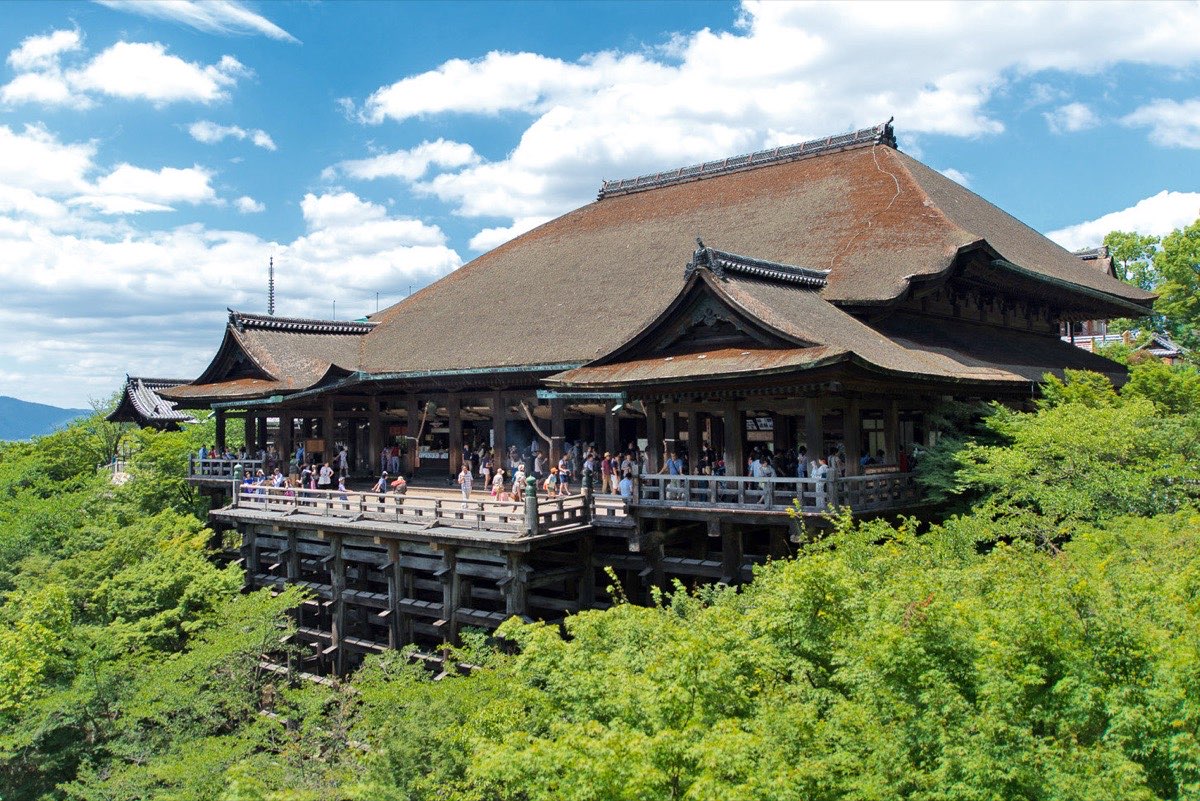
Photo from Wikimedia Commons
Japan's ancient capital, home to 2,000 temples and 17 UNESCO sites/Everyday Places
Kyoto served as Japan's imperial capital for over 1,000 years, from 794 to 1868, and remains the cultural heart of the nation. The city was laid out in a grid pattern modeled on the Chinese Tang dynasty capital Chang'an. Kyoto contains approximately 2,000 temples and shrines, 17 UNESCO World Heritage Sites, and many of Japan's most famous cultural traditions including the geisha (geiko) of Gion, traditional tea ceremonies, and kaiseki cuisine. It was deliberately spared from Allied bombing during World War II, partly because of its cultural significance, though the decision was more complex than often portrayed. The city covers about 827 square kilometers.
Capital from 794 to 1868 AD