Height2.1 m
61.8 millionthsBermuda lengths
84Postage stamp widths
1.5 trillionthsSaturn orbit radii
Full press assembly
The world's least useful encyclopedia
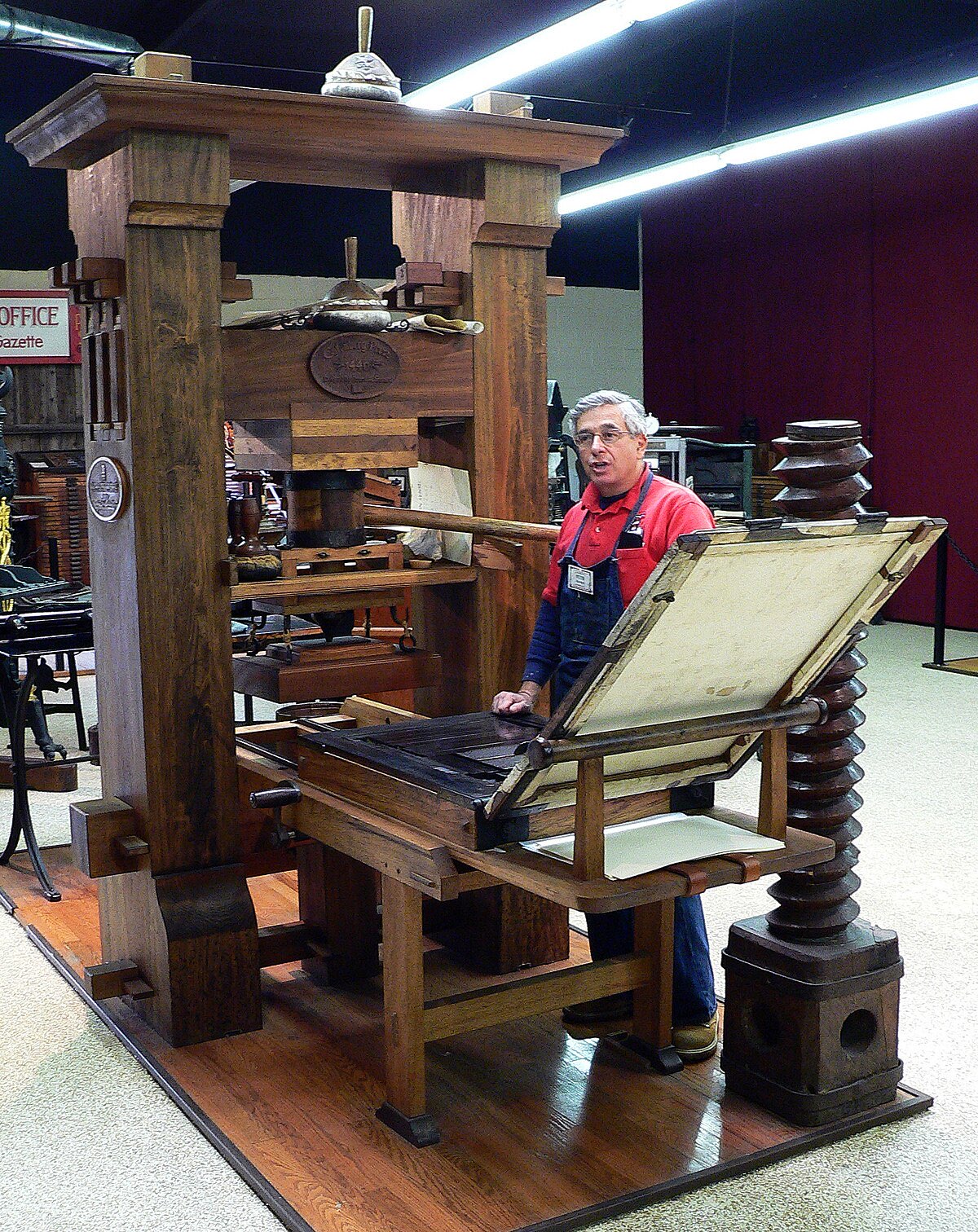
Photo from Wikimedia Commons
The movable-type press that launched the information age/Historical
Johannes Gutenberg's printing press, developed around 1440 in Mainz, Germany, was adapted from existing screw presses used for wine and olive oil. The press stood about 2.1 m tall and 1.5 m wide, with a flat stone or metal platen pressed against inked movable metal type. A skilled operator could produce about 240 impressions per hour. The invention of movable-type printing in Europe (independently developed earlier in East Asia) revolutionized the spread of knowledge and is often cited as one of the most important inventions in human history.
Full press assembly
Frame width
Bed depth
Wooden frame with metal fittings
Printing surface per impression
Main pressure screw