Total land area7.9 billion m2
4.2 billionStandard doors
16.4 trillionPostage stamp areas
121 millionClassrooms
7,880 square kilometers across all islands
The world's least useful encyclopedia
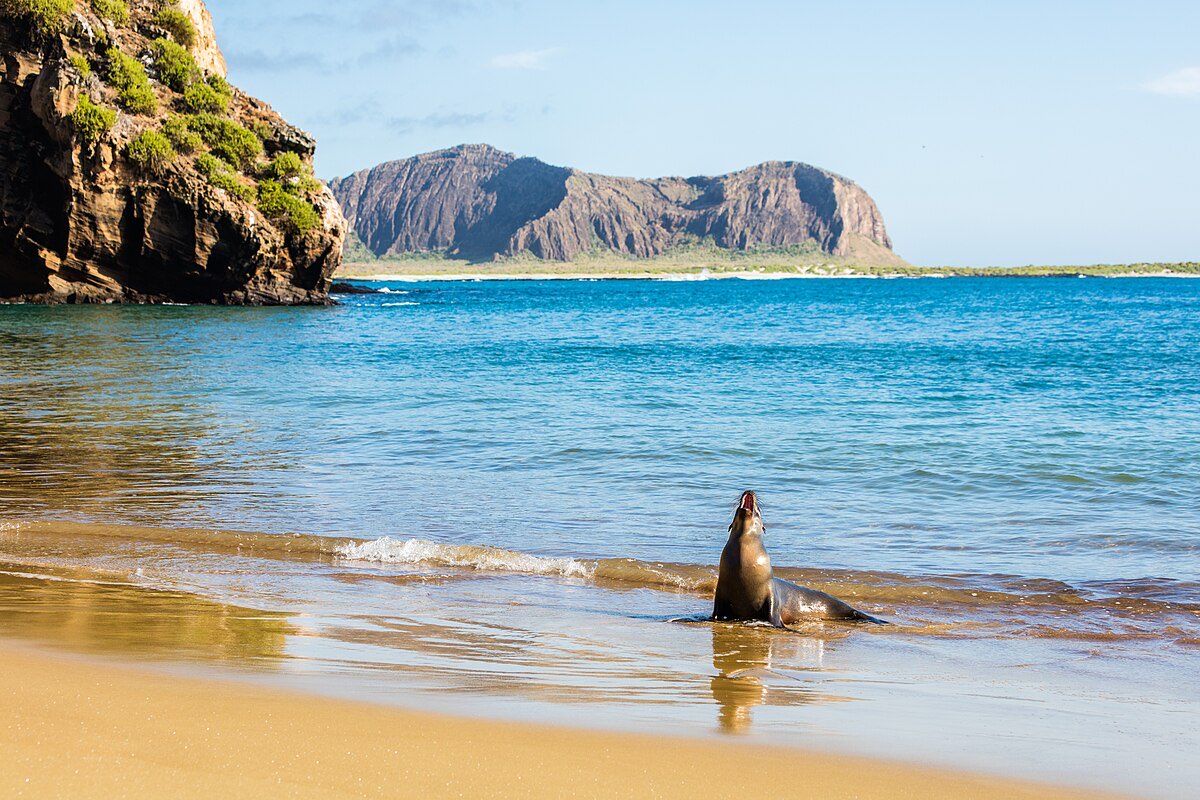
Photo from Wikimedia Commons
The Pacific archipelago that inspired Darwin's theory of evolution/Islands
The Galapagos Islands are a volcanic archipelago of 13 major islands, 6 smaller islands, and over 100 islets straddling the equator 906 km off Ecuador's coast. Total land area is about 7,880 square kilometers. Charles Darwin's visit in 1835 on HMS Beagle and his observations of the islands' unique finches, tortoises, and iguanas were crucial in developing his theory of evolution by natural selection. The islands' isolation has produced extraordinary endemic species including the Galapagos giant tortoise, marine iguana, and flightless cormorant.
7,880 square kilometers across all islands
4,588 square kilometers
NW to SE span
From Ecuador's coast
On Isabela island
138,000 km2 of protected ocean