Cell length55 millionths m
8.2 millionthsAmbulance lengths
183 millionthsBread loaves
2.8 millionthsGrain silo heights
About 55 micrometers
The world's least useful encyclopedia
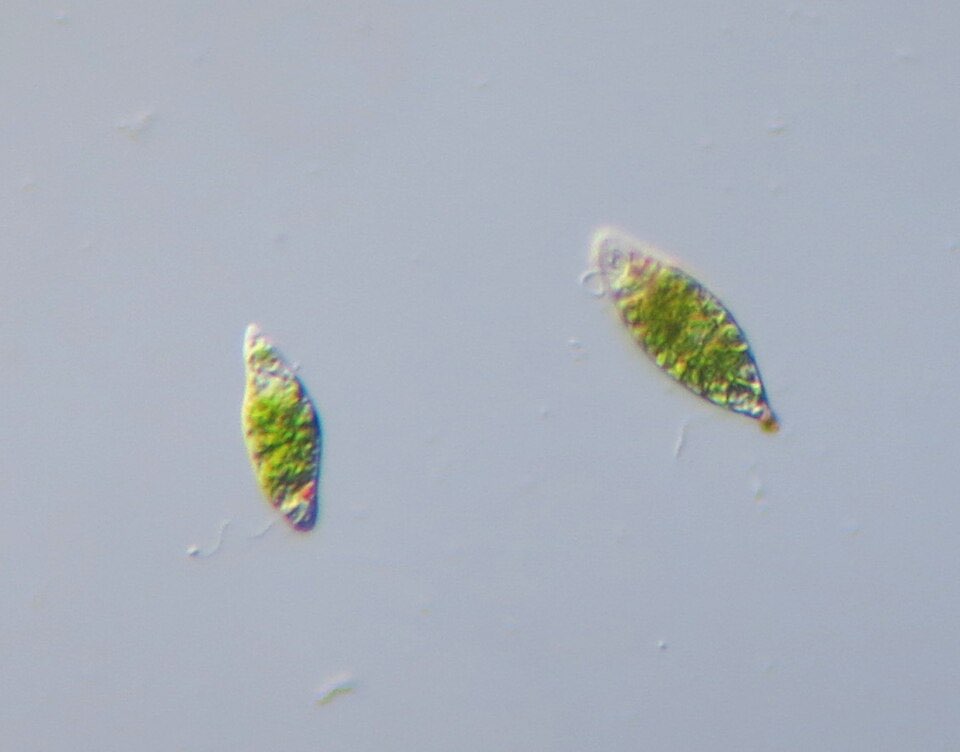
Photo from Wikimedia Commons
A single cell that is both plant and animal at the same time/Microscopic Life
Euglena is a genus of single-celled organisms that blur the line between plant and animal. They contain chloroplasts and can photosynthesize like plants when light is available, but they can also consume food particles like animals when light is scarce. This dual lifestyle is called mixotrophy. Euglena have a flexible protein-rich outer layer called the pellicle, which allows them to change shape in a squirming motion called euglenoid movement. A red eyespot (stigma) near the base of their flagellum helps them detect light and swim toward it. There are over 1,000 described species, found mainly in freshwater environments.
About 55 micrometers