Body length1.5 thousandths m
3,947Violet light wavelengths
1.5 millionNanometers
20Human hair widths
About 1.5 mm
The world's least useful encyclopedia
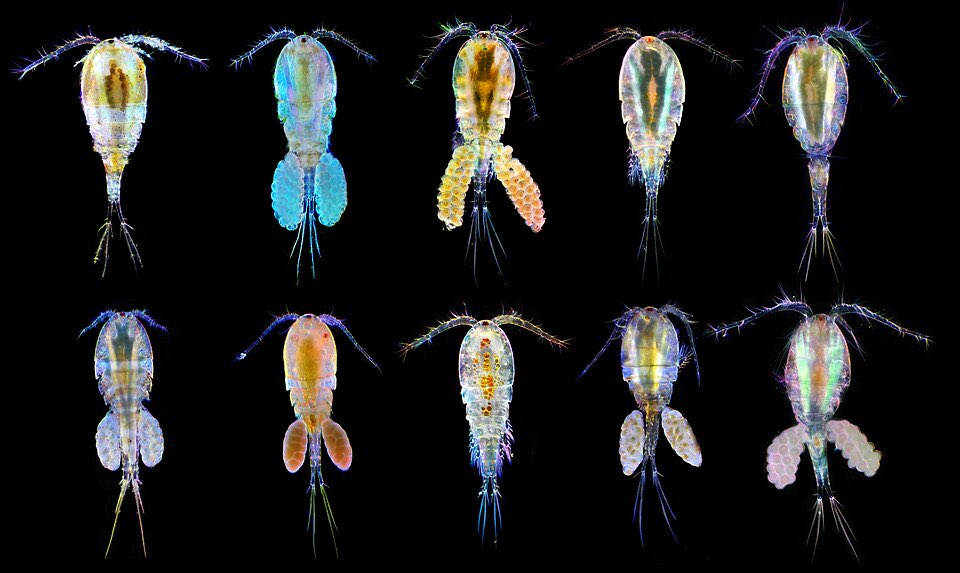
Photo from Wikimedia Commons
The ocean's most numerous multicellular animal, fueling the marine food web/Microscopic Life
Copepods are tiny crustaceans, typically 1 to 2 mm long, that constitute the most abundant multicellular animal group in the ocean and possibly on Earth. They form the critical link between microscopic phytoplankton and larger marine animals such as fish and whales. Copepods can jump at speeds of over 500 body lengths per second, making them among the fastest animals on Earth relative to their size. A single copepod can consume up to 370,000 phytoplankton cells per day. Their fecal pellets are a major component of 'marine snow,' the constant rain of organic matter that feeds deep-sea ecosystems.
About 1.5 mm
About 5 micrograms
About 60 days