Diameter5 millionths m
117 millionthsGolf ball diameters
3.9 billionthsBridge spans
61.5 septillionthsSirius distances
About 5 micrometers
The world's least useful encyclopedia
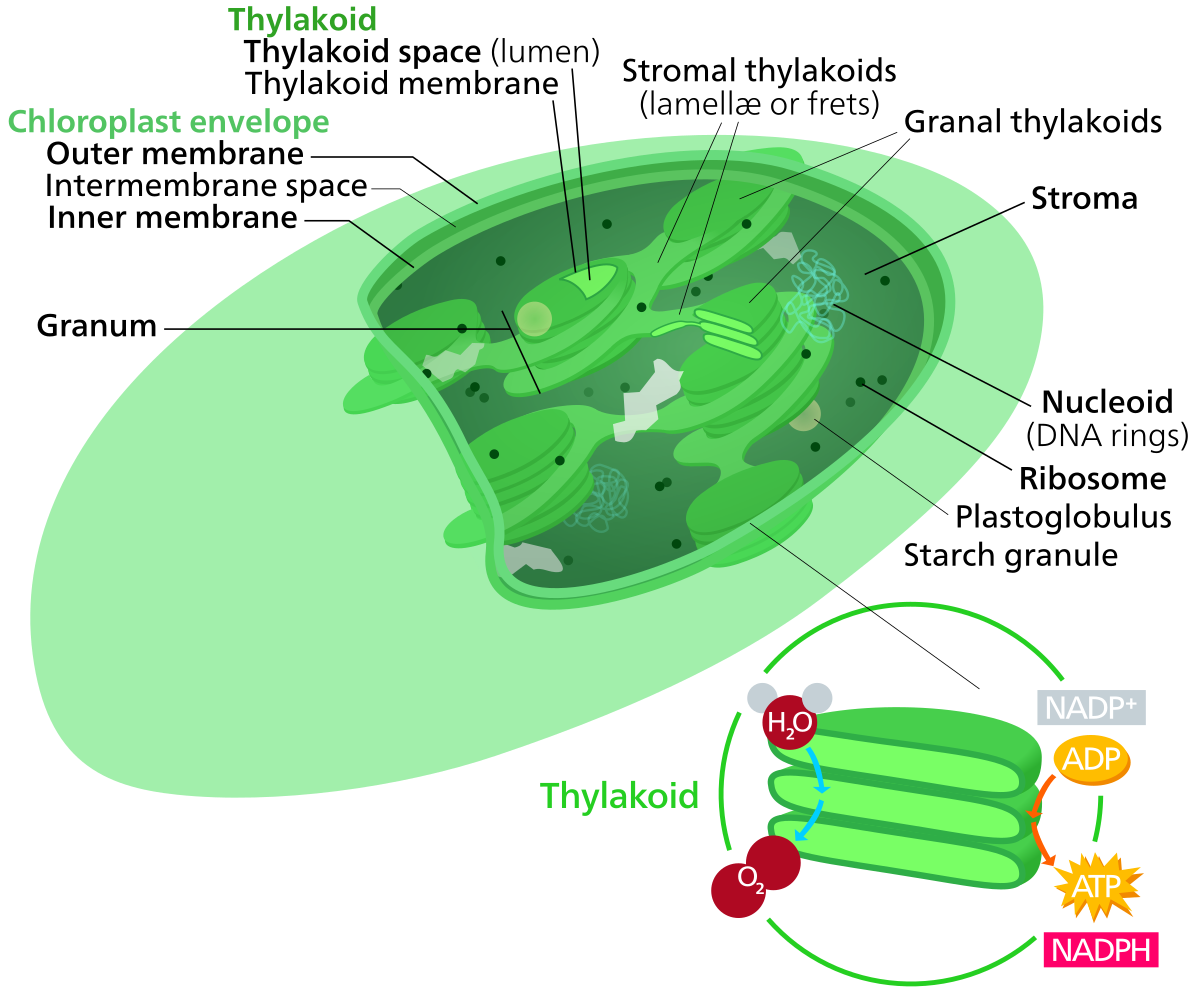
Photo from Wikimedia Commons
The solar-powered organelle that feeds the planet/Biology & Ecosystems
Chloroplasts are the organelles in plant cells responsible for photosynthesis, converting light energy, water, and carbon dioxide into glucose and oxygen. A typical chloroplast is disc-shaped, about 5 micrometers in diameter and 2 micrometers thick. Each leaf cell contains 10 to 100 chloroplasts, and they contain their own DNA, a remnant of their origin as independent cyanobacteria engulfed by early eukaryotic cells roughly 1.5 billion years ago.
About 5 micrometers
Typical range 10 to 100
About 1.5 billion years