Height26 m
15Yoga mat lengths
26 billionCaffeine molecules
The world's least useful encyclopedia
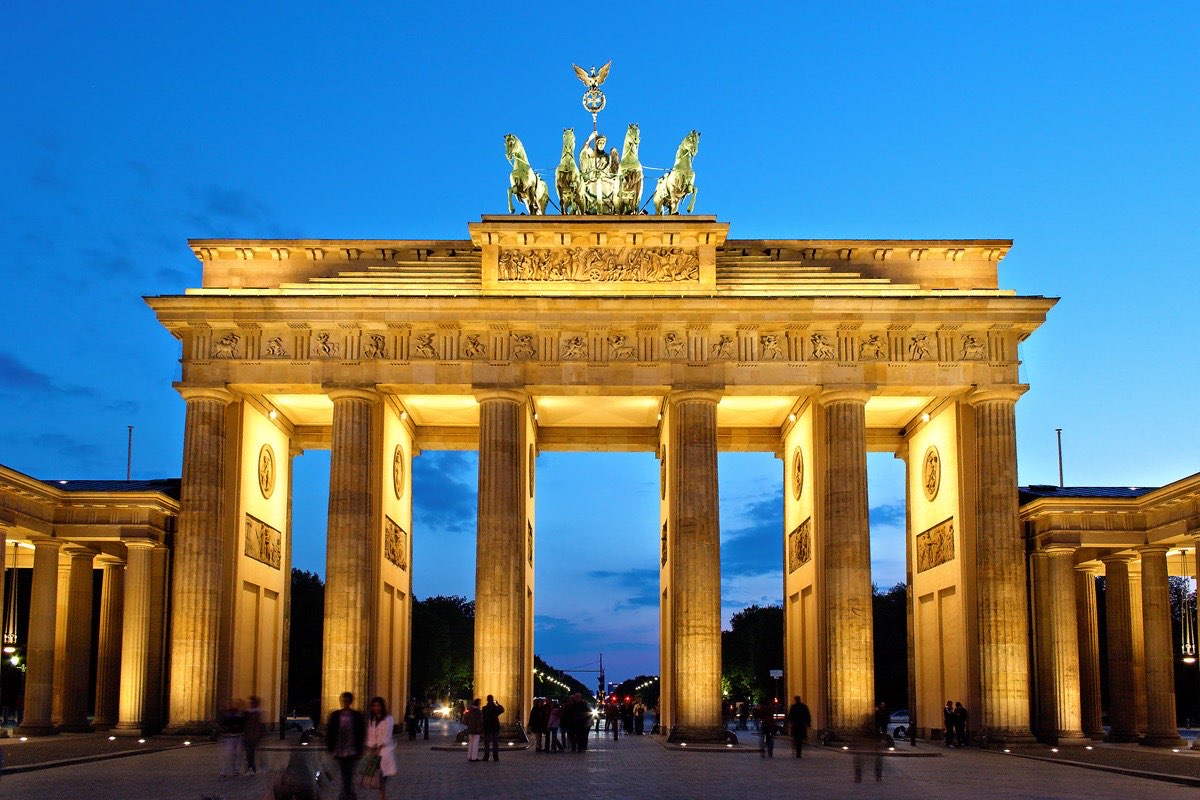
Photo from Wikimedia Commons
Berlin's neoclassical symbol of unity, once divided by a wall/Ancient Structures
The Brandenburg Gate (Brandenburger Tor) is an 18th-century neoclassical monument in Berlin, Germany, built between 1788 and 1791 by Prussian King Frederick William II. Standing 26 meters tall with 12 Doric columns forming five passageways, it was modeled after the Propylaea gateway to the Acropolis in Athens. The quadriga, a chariot drawn by four horses atop the gate, was taken to Paris by Napoleon in 1806 and returned in 1814. During the Cold War, the gate stood in no-man's land between East and West Berlin, becoming the foremost symbol of German reunification when the wall fell in 1989.
Completed 1791