Total aqueduct length17,000 m
4,595Kayaks
279Hockey rink lengths
24,781Tennis rackets
The world's least useful encyclopedia
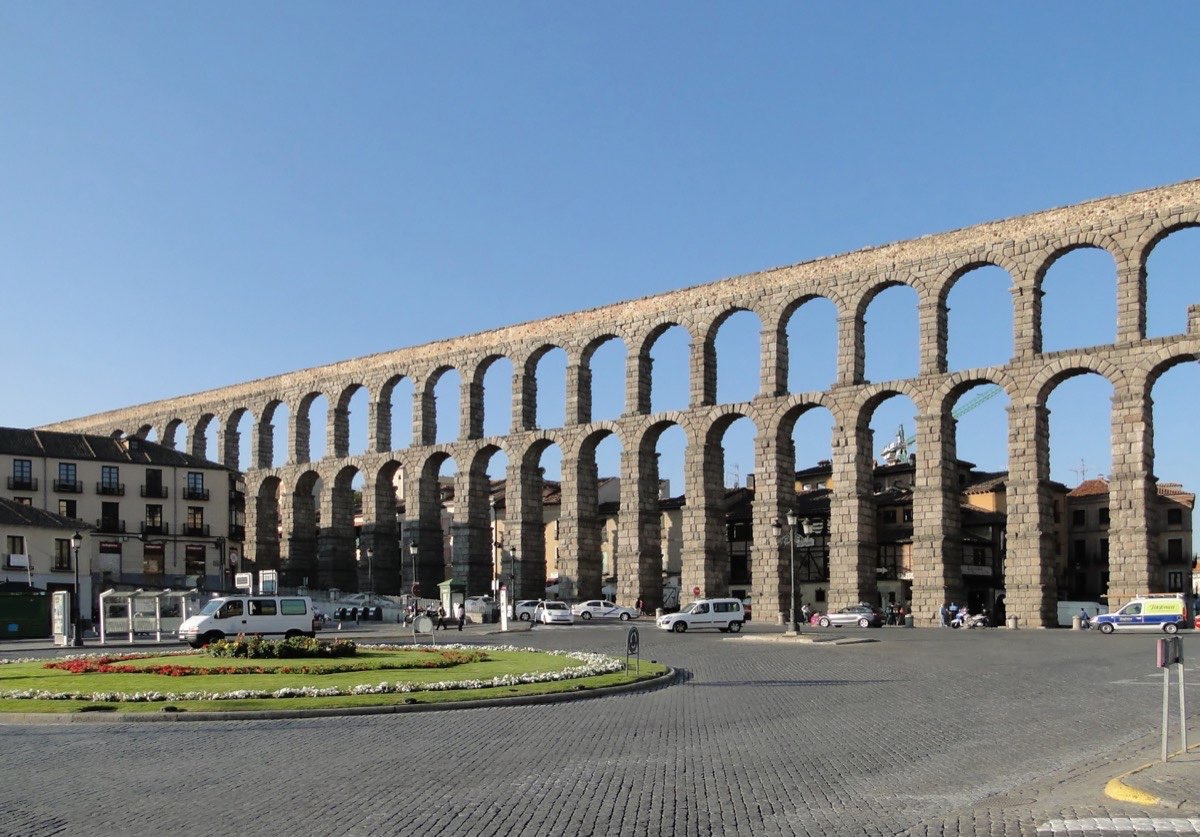
Photo from Wikimedia Commons
A Roman engineering marvel built without mortar that still stands/Infrastructure
The Aqueduct of Segovia is a Roman aqueduct in Segovia, Spain, and one of the best-preserved examples of Roman engineering. Built in the late 1st or early 2nd century AD during the reigns of emperors Domitian and Trajan, it carried water from the Frio River 17 kilometers to the city. The most spectacular section features 167 arches reaching a maximum height of 28.5 meters, all constructed from roughly 20,400 granite blocks assembled without mortar or clamps, relying solely on the precision of the stonework and gravity. It continued to supply water to Segovia until the mid-20th century.
Built circa 1st-2nd century AD