Area14.2 trillion m2
25.8 millionGolf courses
94.7 quadrillionPinky fingernails
14.2 million square kilometers
The world's least useful encyclopedia
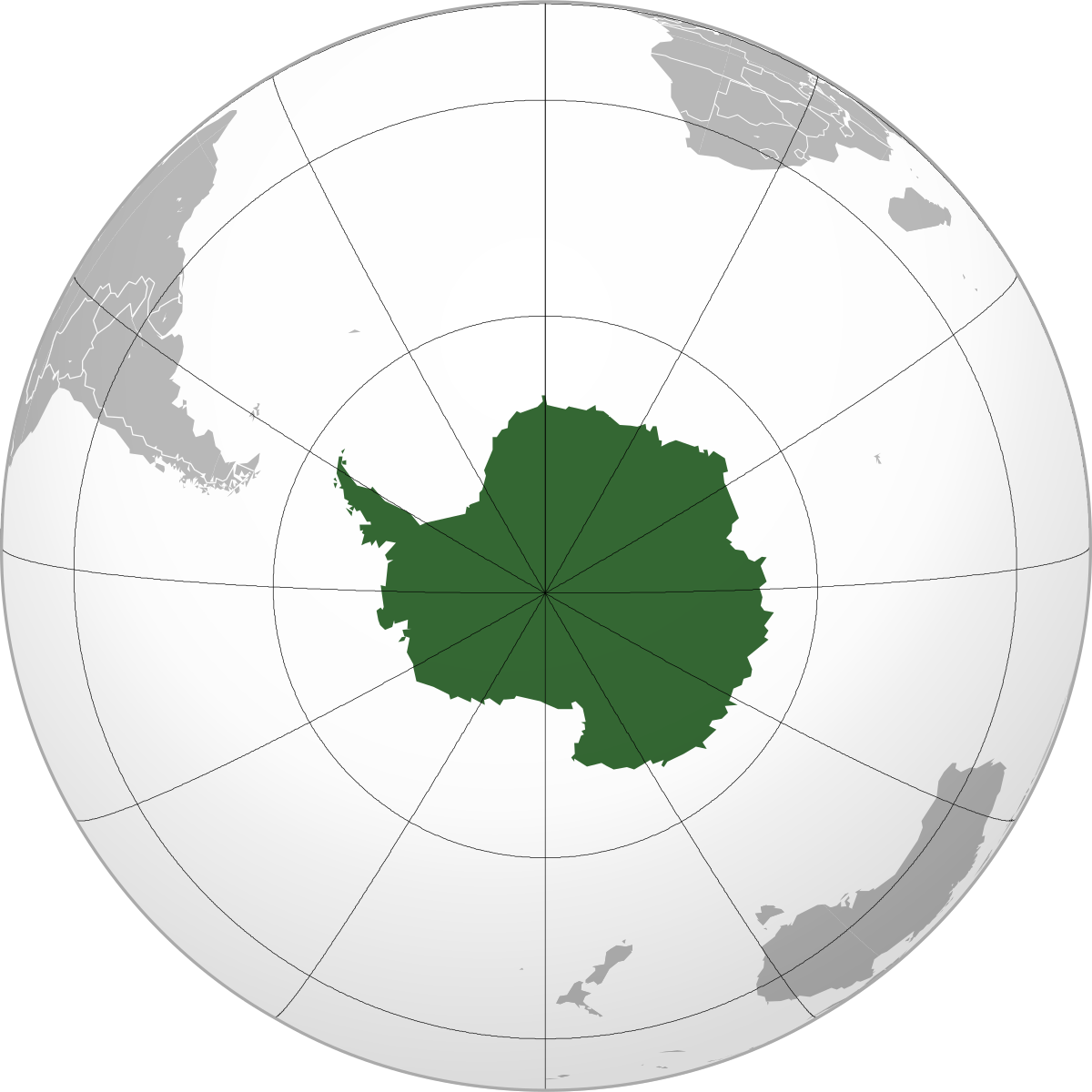
Photo from Wikimedia Commons
The largest and coldest desert on Earth, covering an entire continent/Deserts
Antarctica is technically the world's largest desert by area, receiving less than 200 mm of precipitation annually (mostly as snow), with some interior regions receiving less than 50 mm. The ice-free McMurdo Dry Valleys haven't seen rain in roughly 2 million years. The Antarctic ice sheet averages 2,160 m thick and contains about 26.5 million cubic kilometers of ice, representing roughly 70% of the world's fresh water. Temperatures have reached -89.2 degrees C at Vostok Station, the coldest reliably recorded temperature on Earth.
14.2 million square kilometers
Continental ice sheet average
Astrolabe Subglacial Basin
26.5 million cubic kilometers
-89.2 degrees C at Vostok Station
Less than 50 mm water equivalent