Facade height33 m
110 quadrillionthsOort Cloud edges
1,093AirPod lengths
2.3 thousandthsStrait of Gibraltar widths
Rock-cut cliff face
The world's least useful encyclopedia
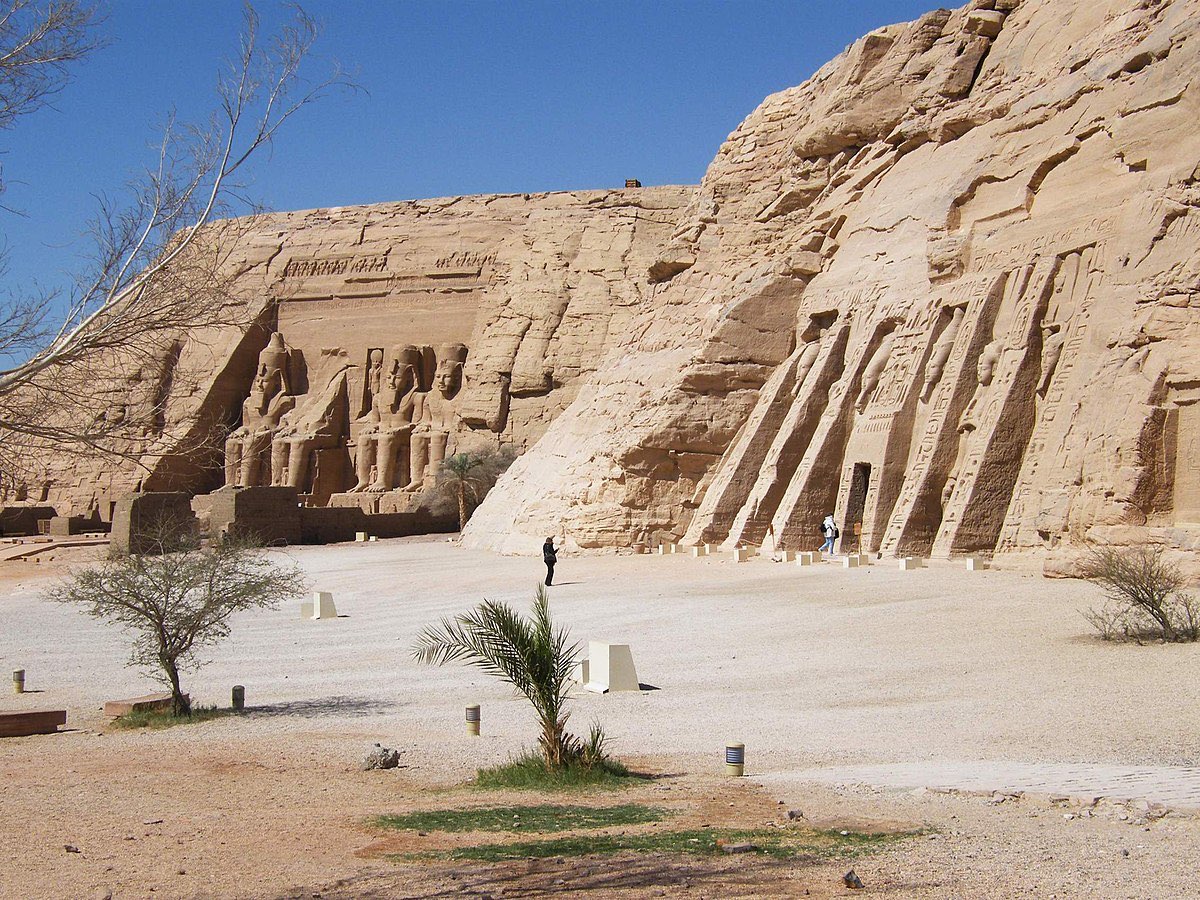
Photo from Wikimedia Commons
Ramesses II's massive rock-cut temple with four colossal statues/World Landmarks
The Great Temple of Abu Simbel in southern Egypt was carved out of a sandstone cliff during the reign of Pharaoh Ramesses II in the 13th century BC. The temple's most striking feature is its facade, which includes four seated colossi of Ramesses, each 20 m tall. The temple extends 56 m into the cliff and is aligned so that twice a year (February 22 and October 22), sunlight penetrates the entire length to illuminate the statues of gods in the innermost sanctuary. The entire temple was relocated in 1968 to save it from flooding caused by the Aswan High Dam.
Rock-cut cliff face
Across the front
Into the cliff from facade to sanctuary
Each of four Ramesses statues
Raised 65 m above original site
Approximately 250,000 tonnes moved